A woman moved to the Roaring Fork Valley planning to run a training stable on five acres in the hills. The listing agent and her own buyer's agent both assured her the well on the property could water the whole parcel, horses included. She had it written into the contract as a contingency. Before closing, she was told the selling broker had confirmed the well met the terms. About a year later, she found out by accident that the well was permitted for household use only. Water could run to her kitchen sink and nowhere else. Two brokers and the seller ended up splitting a $30,000 settlement to make it right, according to an account published by a Colorado real estate attorney on the law firm site Frascona.com.
That case did not happen in Missouri Heights specifically, but it is the exact mistake waiting inside almost every parcel up there. Missouri Heights sells on acreage, on Mt. Sopris views, on the promise of horses and a garden and room to spread out. What the acreage number on the listing sheet does not tell you is whether any of that is legal.
Treat it as if he has no well.
That is the standard the attorney applies to any well permit that does not match the seller's claimed use, and it is the standard every Missouri Heights buyer needs before writing an offer.
The line runs at 35 acres, not at the property boundary
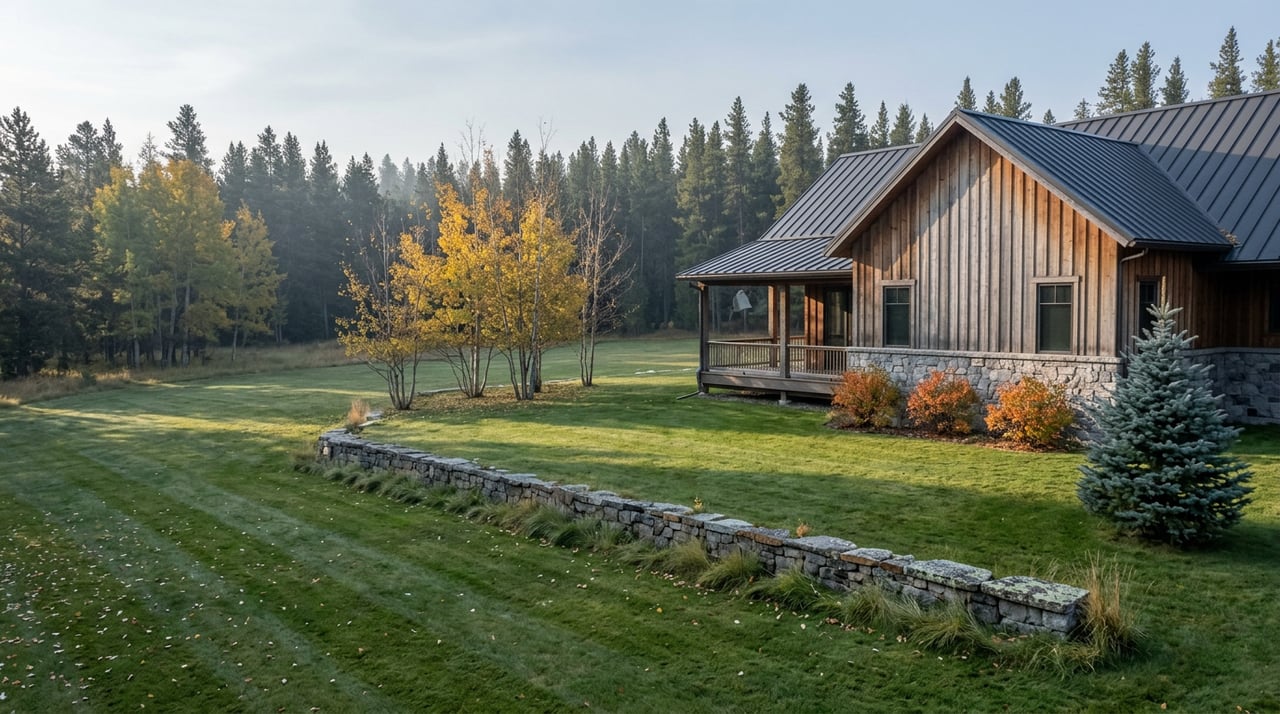
Missouri Heights sits on the bluff between Carbondale and El Jebel, a patchwork of former ranches now subdivided into places like Stirling Ranch, Spring Park Meadows, Ranch at Coulter Creek, Callicote Ranch, High Aspen Ranch, and Aspen Mountain View Estates, along with more modest pockets like Red Table and Kings Row. Crystal Springs Ranch, an equestrian center a few miles above the valley floor, gives a sense of what the area is built around. Parcels here run from under an acre to well over a hundred, and the marketing on almost every one of them leans on the same three things: acreage, privacy, and a Mt. Sopris view.
None of those three things determine what you can legally do with the water underground. Colorado's 35-acre rule does.
Sarah Brucker, deputy state engineer at Colorado's Division of Water Resources, laid it out plainly in a 2025 interview with Colorado Public Radio: wells on lots under 35 acres are typically restricted to indoor use only, no watering a garden, no washing a car, nothing outside the house. Parcels of 35 acres or more, by contrast, generally qualify for what the state treats as a domestic and livestock well, which can supply up to three single-family homes, irrigate up to one acre of lawn or garden, and water livestock and domestic animals. The distinction is written into Colorado's exempt well statute, and the Division of Water Resources has published the current guideline on how it applies.
The acreage that decides which well you get is not a soft guideline. It is a hard line, and 34.9 acres sits on the wrong side of it just as firmly as 20 acres does.
What that line actually buys
| Parcel size | Permit type | What the water can legally do |
|---|---|---|
| 35 acres or more | Domestic and livestock (exempt well) | Indoor use in up to three homes, irrigation of up to one acre, watering of livestock and domestic animals |
| Under 35 acres, drilled after May 1972 | Household use only | Indoor use in a single dwelling, no outdoor watering of any kind |
| Any size, in use before 1976 | Grandfathered exempt well | Whatever use was established historically, recorded with the state water board |
This is why Missouri Heights listings so often lead with the acreage number and, right next to it, the words "domestic well" or "no HOA." One recent listing for a 36.45-acre parcel pointed to nearby five-acre lots that had sold for $875,000 as a way of framing its own price, a comparison that only makes sense once you understand the two parcels are not competing on the same terms. The five-acre lot, water law aside, cannot legally support a garden or a horse. The 36-acre lot can support both, plus a second dwelling. Acreage is the input. The well permit is what turns that acreage into a functioning ranchette, a buildable homesite, or a house with a very expensive dry lawn.
The reverse also happens. A seller advertising "no HOA and a domestic well" on a listing under 35 acres is almost certainly describing a well drilled before the current rule took hold, or one tied to a pre-1972 subdivision exemption. That kind of well is a real asset, but it is not automatic, and it does not transfer just because the listing says so.
Why this is a due diligence problem and not a listing detail
The state does not patrol these wells. Brucker told Colorado Public Radio that limitations are mostly enforced when a neighbor complains, which means a household-use-only well can water a garden for years without incident right up until a title company, a lender, or a resale buyer's attorney asks to see the permit. At that point the physical evidence of years of outdoor watering does not matter. The permit language does.
Here is what that means in practice for anyone comparing a Missouri Heights parcel to acreage elsewhere in the valley.
- Ask for the well permit number before you ask about the well's flow rate or depth. A well without a permit is legally the same as no well at all.
- Confirm the permit's stated use matches your plans, not the general description in the listing. "Domestic well" on a marketing page is not a legal term. "Domestic and livestock" or "household use only" on the permit itself is.
- If the parcel is under 35 acres and has no existing well, find out whether it was subdivided before June 1, 1972, or created through a legal exemption to local subdivision rules. Either can qualify the land for a household-use permit, but neither unlocks livestock or garden water.
- Get the seller's disclosure of well use in writing, matched to your intended use, rather than a verbal assurance that "everyone waters their garden up here."
- If the property carries a grandfathered well predating 1976, ask to see it recorded with the state water board. Grandfathered status is a real exemption from the priority system, but it has to be documented to mean anything at closing.
None of this replaces a water attorney's review on a transaction that hinges on it, and buyers weighing a horse property or a build site on acreage should expect that conversation to be part of the process, not an afterthought.
What this means if Missouri Heights is on your shortlist
Buyers comparing Missouri Heights to in-town lots in Carbondale or Basalt are often comparing two different water systems entirely. Municipal water in town removes this question. Up on the bluff, above Highway 82, water is almost always a private well, and the acreage on the plat is doing double duty as both a lifestyle number and a legal classification. A property a few acres short of the line can still be beautiful, private, and priced fairly. It simply cannot be marketed to you as a garden-and-horses property unless the permit says so.
That is the number worth asking about before the view, before the square footage, before anything else on the sheet.
A few questions buyers ask first
Does 34.9 acres round up to 35? No. The statute reads 35 acres or more, and Colorado's Division of Water Resources applies it as written.
If the current owner has been watering a garden for years, doesn't that prove the well allows it? Not legally. Enforcement is largely complaint-driven, so years of outdoor use on a household-only permit can go unnoticed until a resale, a lender, or a neighbor brings it up.
Can I combine two adjacent Missouri Heights lots to reach 35 acres? That depends on how the parcels are legally described and whether the state treats them as a single tract for permitting purposes, which is exactly the kind of question a water attorney or the Division of Water Resources should answer before you write an offer, not after.
Missouri Heights rewards buyers who ask the right question early. If you are comparing acreage up on the bluff against anywhere else in the Roaring Fork Valley, SSC & Company can walk the permit history with you before you fall for the view.
Schedule a Private Consultation