Ride the Rio Grande Trail north from Aspen on any weekday morning and you will pass through Woody Creek before you have time to notice you left it. The trail narrows here, the pavement gives way to packed gravel, and the Roaring Fork River pulls in close enough to hear over your tires. Most people keep pedaling toward Basalt or Carbondale without stopping. The ones who live here know to slow down, because this quarter mile of trail, the log cabin beside it, and the river underneath it are doing more this year than they have in a long time.
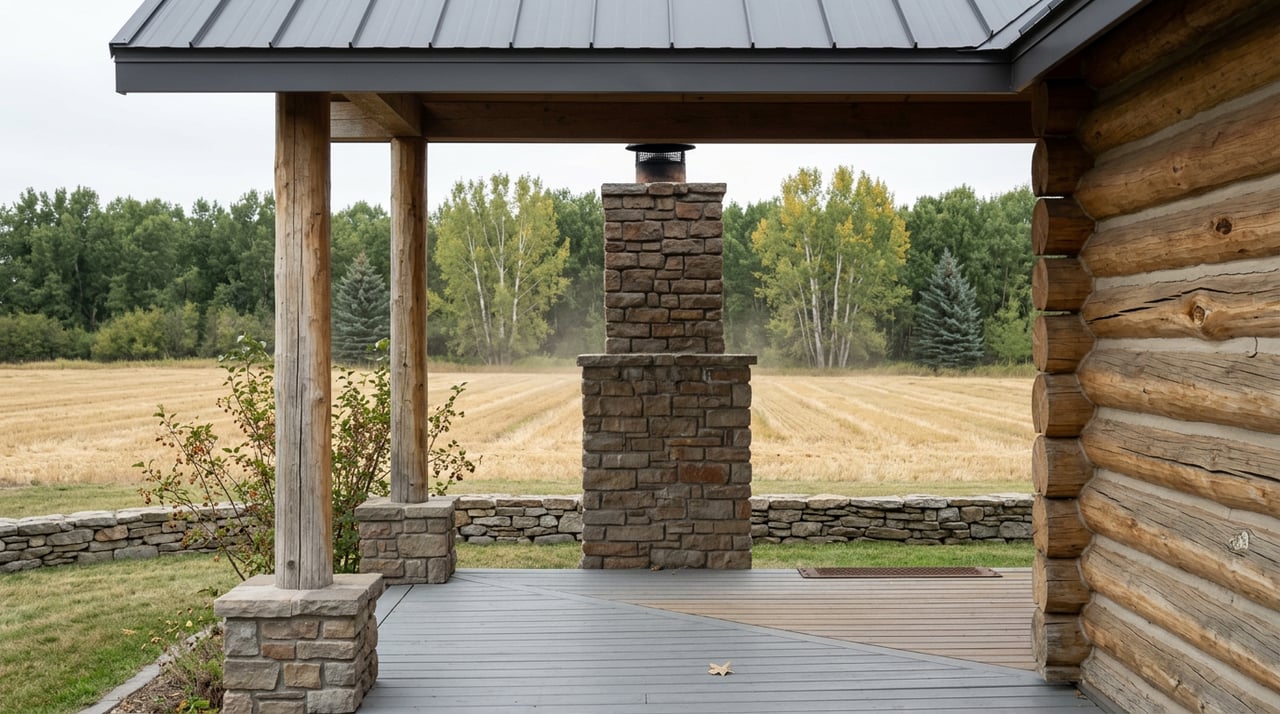
The log building is easy to place. It houses the Woody Creek Tavern, a favorite hangout of the late writer Hunter S. Thompson, on one side and the Woody Creek Community Center on the other. Both have been there, in one form or another, since the 1940s. What is not easy to place, unless you have been reading RFTA's own filings, is what is happening to the trail itself.
One Corridor, Two Owners, One Dividing Line
The Rio Grande Trail is not a single piece of public land with one landlord. The Roaring Fork Transportation Authority owns and manages a 33.4-mile historic railroad corridor that runs from Glenwood Springs to Woody Creek, acquired in 1997 and preserved under a federal designation called railbanking. That status matters more than it sounds. Railbanking means the corridor is legally held in reserve for future freight or rail use even while it functions today as a bike path. It is not a park. It is a mothballed railroad that happens to have a very nice trail on top of it.
Past Woody Creek, ownership changes hands. The remainder of the corridor, from Woody Creek up to Aspen, belongs to Pitkin County and, once it crosses into city limits, the City of Aspen. Woody Creek is not just a stop on the trail. It is the exact point where one legal owner's jurisdiction ends and another's begins, which is why any decision RFTA makes about its stretch of corridor has to reckon with Woody Creek first.
The Study That Changes The Question
For most of the trail's life, that distinction was a technicality. In March 2026, Aspen Journalism reported that RFTA is beginning to study how its railbanked corridor could be used for mass transit, not just recreation, as part of a 2026 transportation development plan meant to respond to growing pressure on Highway 82. The report notes that no engineering or construction work is expected at this stage, but the study itself is new, and it is aimed squarely at the ground residents walk their dogs on.
The easement that governs current trail use just got a long extension. An interim trail easement between Emma and Woody Creek, originally set to expire in 2020, was extended by RFTA and the Pitkin County commissioners to run through 2050, or until a rail line is placed in the corridor, whichever comes first. That date is worth sitting with. It is not a countdown to change. It is a commitment to keep the trail as it is for another quarter century, while leaving the door open for exactly the kind of transit conversation now underway.
The numbers explain why anyone is paying attention at all. According to Pitkin County Open Space and Trails, the upper stretch of the Rio Grande Trail between the Aspen Post Office and Woody Creek sees roughly 83,000 users a year.
| Trail segment | Annual users | Source |
|---|---|---|
| Aspen Post Office to Woody Creek | ~83,000 | Pitkin County Open Space and Trails |
| Carbondale (busiest section) | ~115,000 | RFTA estimate |
The Woody Creek segment is not the busiest stretch of the trail, but it carries enough daily traffic that any future transit decision here would touch a real number of people, not a theoretical one.
What Is Actually Under Construction
While the transit study is still in its early stages, the physical corridor has already seen work this year. RFTA reported that construction on the Elk Creek Bridge finished ahead of schedule, with normal operations resuming at 11:40 a.m. on Wednesday, June 10, 2026. Separately, RFTA announced this spring that the engineering firm SEH Inc. would conduct bridge and underpass inspections along the full length of the trail, from 7th Street in Glenwood Springs all the way to Woody Creek, the same endpoint that marks the edge of RFTA's ownership.
RFTA has also said it plans to remove and sell the remaining sections of track still visible between Glenwood Springs and the Wingo area near Basalt, and is reviewing rail-salvage proposals in 2026. None of this changes what the trail looks like from a bike seat in Woody Creek today. It does mean the corridor is being actively maintained, inspected, and inventoried in ways that suggest RFTA is treating it as an asset with a future, not a fixed amenity.
The Log Cabin That Keeps Changing Anyway
The building next to all of this has its own history of quietly reinventing itself while looking exactly the same. The Woody Creek Tavern changed hands in 2007, when longtime owners Shep and Mary Harris sold the business for $2 million to Kevin Willson and Laura Wren, who also owned the Wienerstube restaurants in Aspen and Basalt. Reporting at the time noted the sale was financed in part with a loan from Leonard "Boogie" Weinglass, the Aspen philanthropist and owner of Boogie's Diner. The new owners kept the staff, the furnishings, and the decor intact, and the tavern's walls still carry the layered collection of Polaroids and memorabilia that has built up over more than four decades.
Next door, the Woody Creek Community Center, known locally as WC3, has had a rougher path to its current form. The space was closed by Pitkin County in 2006 and underwent a full structural overhaul before reopening, after George and Patti Stranahan donated use of the building to the WC3 nonprofit and deeded the structure itself, in perpetuity, to the Manaus Fund, a nonprofit Stranahan helped found in 2005. Today WC3 runs a small art gallery, a secondhand bookstore, a cafe serving local and organic food, and a rotating calendar of lectures, author readings, and French classes. It also houses The Neighborhood Clinic, offering free health services to the surrounding community. None of this shows up from the trail. You have to actually stop and walk in.
How To Actually Keep Up With It
For residents who want to track any of this as it develops rather than read about it after the fact, the two most direct channels are RFTA's own news page, where bridge and construction updates are posted as they happen, and the Woody Creek Metropolitan District, which holds its 2026 annual meeting on November 9 at 6 p.m. via Zoom. That meeting is a real avenue for hearing how local governance is thinking about the corridor before any transit study reaches a proposal stage.
The version of Woody Creek that shows up on postcards, the funky log tavern by the river with a bike trail out back, is still accurate. It is also incomplete. The corridor behind the tavern is legally a railroad, actively being studied for transit use, inspected this year from Glenwood Springs to the exact edge of Woody Creek, and governed by an easement that runs to 2050. None of that changes tomorrow's ride. It does change what you are actually riding on.
If you are weighing a move to Woody Creek, or already own here and want a clearer read on how corridor decisions and local land use might touch a specific property, SSC & Company knows this valley from the ground up. Schedule a Private Consultation to talk through what any of this means for your particular stretch of the Roaring Fork.